

What is Holding Back Gender Diversity in the Workplace?

What is Holding Back Gender Diversity in the Workplace?

Companies today are actively trying to attract more women into their organizations. This need exists in all levels and roles of the organization – corporate, manufacturing, entry level, mid-management and the C-suite. 

Employee diversity today means employing more women, emphasizing inclusion of LGBT and disabled persons or broadening employee representations by race, nationality or even caste. I will focus today on gender diversity as it relates to women participation. It is by far the largest diversity talent pool in international labour markets that is underrepresented yet has the potential to generate wealth and economic growth. Our clients are emphasizing more than ever their need to attract a greater number of women to the workforce to take on managerial roles at different organizational levels.


Looking at the Numbers

The simplest place to start is labor force participation of women. In India, despite societal modernization, the ongoing sexual revolution and generally more liberal attitudes, only 23.8% of working age women participate in the workforce. According to the World Bank, modernized labour markets like Singapore (60%) and the United States (56%) showcase better numbers but still do not compare to their male counterparts participation in the workforce which clocks in at 75-80%. China is a unique anomaly – the soon to be largest economy with impressive GDP per capita growth figures over the last decade boasted a 61% women labor force participation rate in 2017. Another outlier is Rwanda (84% women labor force participation), an African country devastated by a genocide in 1994, that removed large numbers of male workforce members and forced women to take up jobs not just in the informal sector but in white collar jobs of the organized workforce. Rwanda is also at the top of global lists in terms of percentage of female parlimentarians (61.3%) and wage-parity (84 cents for every dollar earned by a man vs a comparable statistic in the US of 74%).

India has to go some ways to catch up. The reasons are plenty – a society still dominated by joint families, a culture biased toward educated mothers staying away from the workforce to raise kids and workplace safety of women. These factors can be addressed, but given the status quo it will take a long time to do that. Changing labor laws and employee benefit regulations can be a catalyst that spurs rapid growth in women participation in the workforce.


Gender-Equal Policies

Scandanavian countries (Sweden, Denmark, Iceland, Norway, Finland) have actively encouraged ‘gender-equal’ policies in the workplace as opposed to ‘women-friendly’ or ‘mother-friendly’ policies. Instead of simply raising the maternity leave benefits by days or weeks to encourage mothers to return to the workforce, they have simultaneously raised the paternity leave offering given to working fathers with a use-it-or-lose-it stipulation. Such policies along with better child-care options for new mothers like flexible hours and office day-care facilities help Scandanavian countries maintain their high women labor force participation rates (55-70%).

Things seem to be changing for the better. A 2018-19 All India Survey on Higher Education shows that women are closing the higher education gap in India.
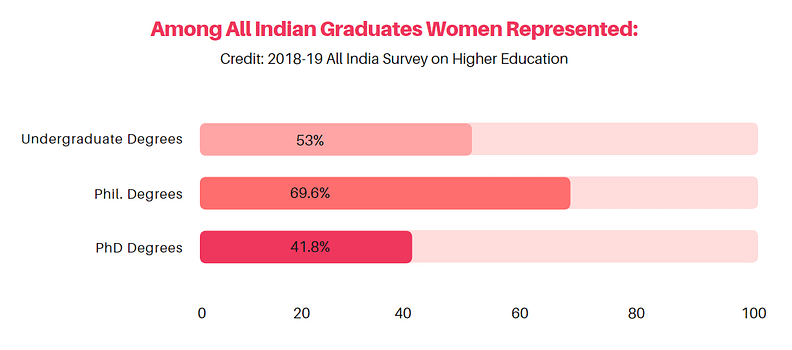
Similar recent and encouraging research is disclosing that the percentage of young, unmarried women entering the workforce is going up steadily as women are demanding and getting more opportunities to start careers. Familial and societal acceptance of young women in high-paying jobs is also improving.

This data represents only a small part of the available information indicating a changing trend toward having more gender diversity across the globe. I would love to hear from you about interesting statistics that reinforce these trends and the factors that are driving this change.

Related Video: #AskTheLeader

Understanding Artifical Intelligence in Recruitment

Understanding Artifical Intelligence in Recruitment

Most recruiters acknowledge that artificial intelligence (AI) will have at least a somewhat significant impact on a company’s recruitment outcomes in the next five years. But few are sure specifically what areas AI can be effectively applied. So how can AI contribute to better recruitment outcomes? Let’s look at four areas where I believe recruiters can start using AI tools immediately to cut down time in the hiring process and make the recruitment experience more candidate-friendly.

1.Recruitment Chatbots

You may have interacted with chatbots when visiting a website to purchase insurance, software or air travel tickets. Chatbots are robot-driven text boxes that pop-up on a website to ask you pre-determined questions to understand your needs, provide you some basic answers and guide you to the next step in the purchase process. Recruitment chatbots work similarly to pre-screen candidates who apply to a job online. In the process, it saves several hours of work of a recruiter who would otherwise conduct this activity manually.

2. Automation of Candidate Sourcing

For advertised job roles where a large volume of candidates apply through different online sources (social media, website, job portals), AI tools will screen these candidates based on initially input feedback from a recruiter and subsequent feedback from the recruiter. It uses this feedback loop from a human being to learn successful recruitment screening strategies over time. The recruiter is only involved in interviewing pre-screened candidates and making a hire.

3. Scouting Older, Unreviewed Candidates from the Past

AI recruiting company Ideal.com states that 65% of all applicants for high volume roles are ignored by recruiters due to a lack of time. 52% of talent acquisition leaders say the hardest part of recruitment is identifying the right candidates from a large applicant pool. AI can help alleviate this burden by constantly screening through previous applicants who have previously applied to other similar roles but were not considered by recruiters due to the sheer volume of applicants.

4. Candidate Matching 

Several multionational companies have begun to proactively engage with passive candidates who are not looking for new opportunities or for whom they may not offer an immediate role. Nonetheless it builds employer brand and goodwill. It also allows companies to be top-of-mind when some of these A-grade candidates become available in the job market. AI can help identify these hihg-potential passive candidates through a process called ‘Candidate Matching’ which involves robotic scouting of high potential candidates across social media platforms to gauge the viability of their candidature and get intimations in real-time when they are looking for jobs. There are several other potential applications of AI including removing human bias to enhance diversity hirning mandates or to evaluate candidates based on facial recognition technology in digital interviews. I have not discussed these as their use cases have not been fully proven.

Where do Artifical Intelligence Tools Fall Short Today?

The biggest challenge with AI today is that it requires large amounts of data to learn patterns and acquire intelligence. This could mean scanning hundreds or even thousands of resumes for one job. It could work for roles which could be attract many hundreds of applicants. But most roles do not tend to do so making machine learning capability redundant. Further, AI can sometimes learn human biases in the recruitment process despite our sincere efforts to avoid this. There have been examples of some AI tools inadvertently screening out women candidates based on misread recruiter inputs at the beginning of the information-feeding process. Finally, AI being a new technology always invites scepticism from adopters. This is true for any technological innovation but especially for AI which tends to make bold claims and is perceived to eventually replace human beings in the recruitment process.

Some Conclusions

Contrary to many peoples’ perception, artificial intelligence is unlikely to replace human beings in the recruitment process. What is more like is that it will make human recruiters more efficient in identifying and engaging with the right candidates. This means less time spent in the sourcing and screening, more information available to candidates and possibly less bias in the recruitment proceess. This is referred to as Intelligence Amplification or Machine Augmented Intelligence by Wikipedia. Augmented Intelligence is essentially machines or technology helping human beings improve the cognitive processing power. It will not replace humans but merely support them to make them more effective. With AI, recruiters will be able to proactively identify candidates rather than spend their time reacting to vacancies that keep opening up. They can focus more on interviewing the right candidates and making hires. They are also likely to have more AI-driven data available to them to influence hiring managers’ decisions. So what do you think? Is AI likely to have the impact described above or could it go beyond that? I would love to hear your thoughts on this emerging technology that has the potential to be a major disrputer in the recruiting space.

Work From Anywhere and the Mobile Workforce

Work From Anywhere and the Mobile Workforce

As part of our unique HR & payroll digital platform called Quikchex, the PSS Group offers a broad array of administrative and analytics features like attendance management, geolocation tracking and timesheet reports which enable HR departments at our client organizations to track employees’ time while at the office.

What we have been seeing from customers lately is that they prefer to substitute time tracking with activity tracking of their teams. This means managers are more interested in what an employee is doing and the results achieved in a day of work than on the actual time spent in an office premises. Employees can work from home or work from a Starbucks. They can choose the days of the week to come to the office for important meetings while the rest of the time they stay away from the work space. This paradigm shift is progressive and forward thinking for Indian companies. It is not limited to young startups but established organizations who are willing to offer greater freedom with greater accountability to their employee teams.

As a result, we have been offering WorkPro’s customers the opportunity to use modules like timesheets and sales activity tracking as they move away from attendance management and location tracking features. These activities can be tied to revenue and profitability metrics likes leads generated, sales orders closed and returns. It has challenged us to reinvent our solution. By doing so, we are providing more strategic information to customers to help them manage their businesses.

I hear that large companies like Unilever have pioneered this practice of work from anywhere. A WorkPro customer in the pharmaceutical industry with a large sales force that is mobile and spread across the country has been using this method of working for several years. We recently introduced this work from anywhere policy with one of our sister companies as well. The verdict is still pending but by all accounts individuals and teams have embraced the concept. With the advent of cloud software, mobile phone apps and better internet connectivity from Indian internet providers, the trend toward mobile work is likely here to stay.

5 Ways to Recruit Successfully as a Start-Up

5 Ways to Recruit Successfully as a Start-Up

The life of an entrepreneur is chaotic and unpredictable in the early days. There are several things you have to oversee – from driving sales, managing your team and firefighting issues that crop up unexpectedly. At the end of a long day, you realize you have forgotten to focus on an activity that needs constant monitoring and momentum built to have success – recruiting. I will discuss five ways you can get results at recruiting without wasting time, having gone through the process as an entrepreneur many times myself.

#1: Know every detail of the role you are recruiting for

A good job description or JD is an essential part of saving time in the recruitment process. Define the KRAs of every role in as few words as possible. If you can, assign weights to each KRA depending on its importance within the role. The JD should outline things like ideal prior experience, skill sets required and special certifications or degrees. Most important – do not forget to include why a candidate should join your firm. The reasons could range from having opportunities more personal growth in a start-up to working with your highly talented and motivated team. You are selling to the candidate as much as he is selling to you.

#2: Figure out which sources your best candidates will come from

This is important to know so you don’t end up talking to candidates who are just not a good fit. For sales manager and sales closer roles, business networking sites like LinkedIn work well as they hire intelligent, motivated candidates with good communication skills and relevant startup experience. Job sites are good for recruiting for technology or programmer roles. The best techies have a passion for what they do, so they will be active on several programming forums or may have their own blog. Doing research on where to find them takes time initially, but pays off in spades as you recruit more.

#3: Cut down your time scheduling interviews

A simple calendar like Google or Outlook puts a meeting/ reminder on your candidate’s schedule. Call him a day before the interview to ensure he is available for the call and cut down on no-shows. If you have multiple interviewers, it is good to consider an Applicant Tracking System like WorkPro that keeps all the information of an applicant’s information in one place and sends intimations to hiring managers and candidates for upcoming interviews.

#4: Share the mission and vision for your company when talking to candidates

Why should a professional join your company? A good candidate has many options and is likely sought after by other firms. Beyond the monetary benefits and role specifics, he must feel that what you are offering is more than just a job. It is an experience of a lifetime and a chance to make an impact with a promising company that will solve a meaningful problem or help people do things a lot better. Your passion as an entrepreneur must be evident to your best candidates or you will end up recruiting only the average ones at best.

#5: Ensure you close on salaries, joining dates and role specs for the best candidates

Recruiting is a lot like sales. You can put in a lot of good work and do all the right things. But if you do not close on a good deal, you will have nothing to show for your efforts. It is an all or nothing game. Realize this and ensure that you and your best candidate agree on what salary he is comfortable with, his notice period, whether he will face resistance from his current company to leave and how to overcome it. Ask yourself – “What can go wrong between making an offer and the person joining you?” Then make sure you have an action plan for every contingency.

Role of HR Technology in Business Growth

Role of HR Technology in Business Growth

The emergence of technology has given HR executives more time to focus on business impact initiatives like talent acquisition and leadership development, while allowing systems to handle tasks like business process management (BPM) and service delivery. This has made the HR function more strategic to organizations. Nowadays HR systems are available in the cloud and can be accessed securely by employees via the internet, making it easier for companies to adopt technology.

According to North American IT services company Sierra-Cedar’s 2016-2017 HR Systems Survey unveiled at the SHRM Tech ’17 Conference, more companies in India and across Asia-Pacific (APAC) region plan to increase their HR technology budgets this year.

The survey white paper suggests that 56 percent of all APAC organizations are planning to increase their HR technology spending this year, out of which 64 percent are India-based organizations. Close to 40 percent of all APAC organizations and more than 50 percent of India-based companies hope to improve or develop new enterprise HR systems strategies this year.

The strategies include areas like – adopting HR technology beyond payroll and core HR management systems, upgrading or shifting to new cloud-based HR systems and investing in new areas like analytics, mobile and social technologies. These strategies were recognized as vital to the survey’s Asia-Pacific participants.

The infographic below illustrates the functions where HR managers are investing 25 percent or more of their time and resources.

The study looked at the HR technology landscape across Asia and India in particular where rapid technological changes are coinciding with economic and cultural changes, making HR technology central to business outcomes. Many companies are revamping their HR processes through the use of technology.

A recent Forbes article pointed to how one of India’s fastest-growing wealth and investment management player ASK Group deployed Oracle HCM Cloud applications with a view to quintuple the size of the assets under its management over the next five years. The company estimates that technology has played a critical role in boosting HR productivity by as much as 30 percent and also helped its four member HR team to raise its productivity by 50 percent. The team now spends much less time managing Excel spreadsheets, downloading, rechecking data and more time providing HR advice and partnering with other business units.

Another diversified financial services firm Motilal Oswal has adopted digital technology to drive their human resource processes. As per an article in ET Tech, the company has introduced a mobile application to manage attendance, leaves and employee benefits. The biggest benefit identified for the company through the adoption of technology is the experience of going paperless. The mobile app enables employees to mark their attendance through cell phones by switching on their location and also helps them apply for leaves and attendance regularization. They have also introduced a virtual learning classroom for staff and use hiring analytics to improve candidate experience, thus using digital to move to a paperless office.

The above examples prove that technology has the potential to add real value to the HR function when it is implemented in the right way. Technologies such as cloud, social media, big data and gamification are transforming how HR professionals work. By choosing the right technology, HR departments can deliver a faster and smarter HR system that can save time and cost, giving them more strategic value. Everything that the HR department does ultimately has the singular focus of enabling employees to perform better.

The HR function is no longer a business enabler, but has become a critical business driver and organizations that adapt to the changing landscape by adopting technology will emerge victorious.