

What is Holding Back Gender Diversity in the Workplace?

What is Holding Back Gender Diversity in the Workplace?

Companies today are actively trying to attract more women into their organizations. This need exists in all levels and roles of the organization – corporate, manufacturing, entry level, mid-management and the C-suite. 

Employee diversity today means employing more women, emphasizing inclusion of LGBT and disabled persons or broadening employee representations by race, nationality or even caste. I will focus today on gender diversity as it relates to women participation. It is by far the largest diversity talent pool in international labour markets that is underrepresented yet has the potential to generate wealth and economic growth. Our clients are emphasizing more than ever their need to attract a greater number of women to the workforce to take on managerial roles at different organizational levels.


Looking at the Numbers

The simplest place to start is labor force participation of women. In India, despite societal modernization, the ongoing sexual revolution and generally more liberal attitudes, only 23.8% of working age women participate in the workforce. According to the World Bank, modernized labour markets like Singapore (60%) and the United States (56%) showcase better numbers but still do not compare to their male counterparts participation in the workforce which clocks in at 75-80%. China is a unique anomaly – the soon to be largest economy with impressive GDP per capita growth figures over the last decade boasted a 61% women labor force participation rate in 2017. Another outlier is Rwanda (84% women labor force participation), an African country devastated by a genocide in 1994, that removed large numbers of male workforce members and forced women to take up jobs not just in the informal sector but in white collar jobs of the organized workforce. Rwanda is also at the top of global lists in terms of percentage of female parlimentarians (61.3%) and wage-parity (84 cents for every dollar earned by a man vs a comparable statistic in the US of 74%).

India has to go some ways to catch up. The reasons are plenty – a society still dominated by joint families, a culture biased toward educated mothers staying away from the workforce to raise kids and workplace safety of women. These factors can be addressed, but given the status quo it will take a long time to do that. Changing labor laws and employee benefit regulations can be a catalyst that spurs rapid growth in women participation in the workforce.


Gender-Equal Policies

Scandanavian countries (Sweden, Denmark, Iceland, Norway, Finland) have actively encouraged ‘gender-equal’ policies in the workplace as opposed to ‘women-friendly’ or ‘mother-friendly’ policies. Instead of simply raising the maternity leave benefits by days or weeks to encourage mothers to return to the workforce, they have simultaneously raised the paternity leave offering given to working fathers with a use-it-or-lose-it stipulation. Such policies along with better child-care options for new mothers like flexible hours and office day-care facilities help Scandanavian countries maintain their high women labor force participation rates (55-70%).

Things seem to be changing for the better. A 2018-19 All India Survey on Higher Education shows that women are closing the higher education gap in India.
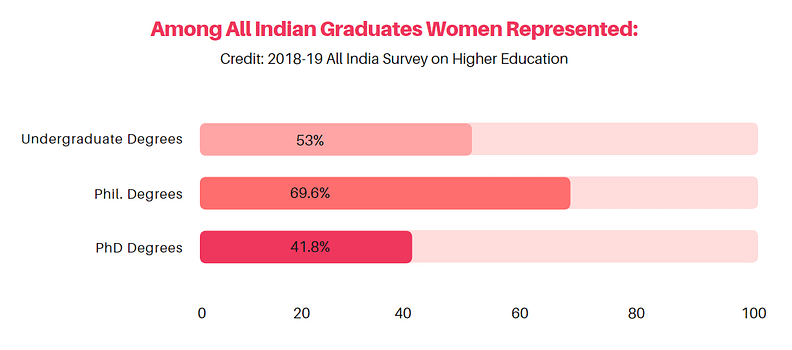
Similar recent and encouraging research is disclosing that the percentage of young, unmarried women entering the workforce is going up steadily as women are demanding and getting more opportunities to start careers. Familial and societal acceptance of young women in high-paying jobs is also improving.

This data represents only a small part of the available information indicating a changing trend toward having more gender diversity across the globe. I would love to hear from you about interesting statistics that reinforce these trends and the factors that are driving this change.

Related Video: #AskTheLeader
Mental Health is a Growing Priority for Today’s Workforce

Mental Health is a Growing Priority for Today’s Workforce

While our modern lifestyles and technology-infused environments have created comforts and luxuries that were unthinkable a few years back, they have also created new challenges for the working professional – work-induced stress, dwindling human interaction and inadequate social support systems. Consequently, worrying statistics and trends are emerging that have started to attract the attention of governments, corporations and mental health advocates. Based on a 2019 research report conducted by the World Health Organiztion (WHO), here are a few of them:

  1. One in five people will experience a mental health condition during their lifetime.
  2. More than 300 million people (5% of the population) suffers from severe depression. About 260 million suffer from anxiety related disorders.
  3. Depression and anxiety have a significant economic impact; their estimated cost to the global economy is US$1 trillion per year in lost productivity.
  4. Harassment and bullying at work are commonly reported problems, and can have a substantial adverse impact on mental health.

While sustained unemployment is a key trigger for onset of mental health disorders, it is not limited only to those gripped by joblessness, new workforce entrants or executives at the bottom of the corporate ladder. Kate Valentine, Founder and CEO of American luxury fashion design house Kate Spade committed suicide in 2018 due to mental health issues. Karl Slym who was global CEO of automotovie conglomerate Tata Motors also died of an apparent suicide in 2014 in Bangkok where he had gone to attend a board meeting. Clearly, even the most accomplished professionals are not immune to clutches of depression and mental disorders.


What can be the reasons for such eventualities?

While risk factors can extend to every facet of life (home, genetics, the economy, limited human interaction), workplace-induced mental health disorders are a major contributor to this emerging problem. Too often, employee-boss relationships are plagued by poor working rapport and inadequate communication. Unclear expectations of roles and informal performance feedback also increase stress levels of employees over time. Limited participation in decision making and a perceived low control over one’s area of work are vestiges of a bygone era of work culture that is unlikely to be acceptable to the millenial employee today.


How Companies are Addressing the Problem

The good news is that some organizations and countries have recognized the problem and starting to introduce measures that help address it. Canada has emerged as a leader in workplace practices. Many companies there have piloted a program called ‘Not Myself Today’. It is based on acknowledging depressive bouts, anxiety and other mental health issues and structuring work around them. Netflix offers its employees the freedom to work flexible hours beyond the normal 9 to 5 workday. It also allows its employees to set their own holiday and vacation schedules that they prioritize depending on when their minds and bodies need a break. Companies like Ernst & Young provide resources like 24/7 counseling support and reach out to its employees who may be struggling to cope with their issues. More companies are adding mental health treatment coverage to their employees’ health insurance benefit plans to address the financial burden of medication and counseling.

Finally, I believe that individuals can take it upon themselves to build skills like having a positive attitude, developing their communication skills and building key traits like persistence that will help them cope with increasing stress levels in the workplace. Here are some resources that I would recommend from my own experience that have benefited me:

  1. NLP – The Essential Guide to Neuro-Linguistic Programming
  2. Getting More – How You can Negotiate to Succeed in Work and Life
  3. The Practicing Mind – Developing Focus and Discipline in Your Life

This is an evolving topic. I would love to hear your thoughts on the emerging challenge of mental health in the workplace and how it can be effectively tackled.

Understanding Artifical Intelligence in Recruitment

Understanding Artifical Intelligence in Recruitment

Most recruiters acknowledge that artificial intelligence (AI) will have at least a somewhat significant impact on a company’s recruitment outcomes in the next five years. But few are sure specifically what areas AI can be effectively applied. So how can AI contribute to better recruitment outcomes? Let’s look at four areas where I believe recruiters can start using AI tools immediately to cut down time in the hiring process and make the recruitment experience more candidate-friendly.

1.Recruitment Chatbots

You may have interacted with chatbots when visiting a website to purchase insurance, software or air travel tickets. Chatbots are robot-driven text boxes that pop-up on a website to ask you pre-determined questions to understand your needs, provide you some basic answers and guide you to the next step in the purchase process. Recruitment chatbots work similarly to pre-screen candidates who apply to a job online. In the process, it saves several hours of work of a recruiter who would otherwise conduct this activity manually.

2. Automation of Candidate Sourcing

For advertised job roles where a large volume of candidates apply through different online sources (social media, website, job portals), AI tools will screen these candidates based on initially input feedback from a recruiter and subsequent feedback from the recruiter. It uses this feedback loop from a human being to learn successful recruitment screening strategies over time. The recruiter is only involved in interviewing pre-screened candidates and making a hire.

3. Scouting Older, Unreviewed Candidates from the Past

AI recruiting company Ideal.com states that 65% of all applicants for high volume roles are ignored by recruiters due to a lack of time. 52% of talent acquisition leaders say the hardest part of recruitment is identifying the right candidates from a large applicant pool. AI can help alleviate this burden by constantly screening through previous applicants who have previously applied to other similar roles but were not considered by recruiters due to the sheer volume of applicants.

4. Candidate Matching 

Several multionational companies have begun to proactively engage with passive candidates who are not looking for new opportunities or for whom they may not offer an immediate role. Nonetheless it builds employer brand and goodwill. It also allows companies to be top-of-mind when some of these A-grade candidates become available in the job market. AI can help identify these hihg-potential passive candidates through a process called ‘Candidate Matching’ which involves robotic scouting of high potential candidates across social media platforms to gauge the viability of their candidature and get intimations in real-time when they are looking for jobs. There are several other potential applications of AI including removing human bias to enhance diversity hirning mandates or to evaluate candidates based on facial recognition technology in digital interviews. I have not discussed these as their use cases have not been fully proven.

Where do Artifical Intelligence Tools Fall Short Today?

The biggest challenge with AI today is that it requires large amounts of data to learn patterns and acquire intelligence. This could mean scanning hundreds or even thousands of resumes for one job. It could work for roles which could be attract many hundreds of applicants. But most roles do not tend to do so making machine learning capability redundant. Further, AI can sometimes learn human biases in the recruitment process despite our sincere efforts to avoid this. There have been examples of some AI tools inadvertently screening out women candidates based on misread recruiter inputs at the beginning of the information-feeding process. Finally, AI being a new technology always invites scepticism from adopters. This is true for any technological innovation but especially for AI which tends to make bold claims and is perceived to eventually replace human beings in the recruitment process.

Some Conclusions

Contrary to many peoples’ perception, artificial intelligence is unlikely to replace human beings in the recruitment process. What is more like is that it will make human recruiters more efficient in identifying and engaging with the right candidates. This means less time spent in the sourcing and screening, more information available to candidates and possibly less bias in the recruitment proceess. This is referred to as Intelligence Amplification or Machine Augmented Intelligence by Wikipedia. Augmented Intelligence is essentially machines or technology helping human beings improve the cognitive processing power. It will not replace humans but merely support them to make them more effective. With AI, recruiters will be able to proactively identify candidates rather than spend their time reacting to vacancies that keep opening up. They can focus more on interviewing the right candidates and making hires. They are also likely to have more AI-driven data available to them to influence hiring managers’ decisions. So what do you think? Is AI likely to have the impact described above or could it go beyond that? I would love to hear your thoughts on this emerging technology that has the potential to be a major disrputer in the recruiting space.